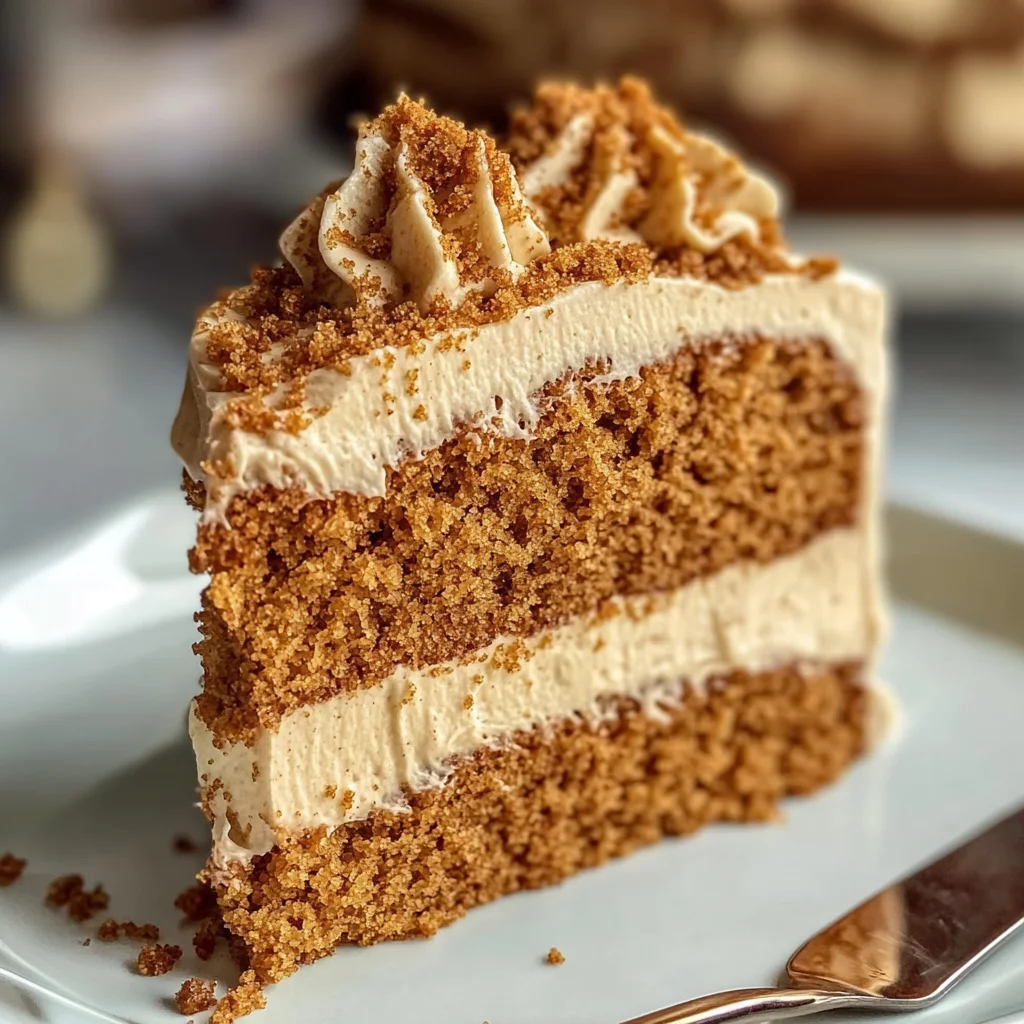
I’ve baked a lot of cakes over the years, but this Biscoff Cake stands out as one of my favorites. The combination of spiced flavors and creamy cookie butter makes it unique and delicious. After some experimentation, I found the perfect balance between moist layers and smooth frosting. In this post, you’ll learn how to create a cake that’s sure to impress.
Why You’ll Love This Recipe
- Moist Layers — This cake stays tender even after a few days, thanks to the addition of whole milk and Biscoff cookie butter.
- Creamy Frosting — The rich buttercream made from cookie butter adds a delightful sweetness that pairs perfectly with the spiced cake.
- Easy Assembly — With straightforward steps, you can stack and frost without fuss, making it accessible for bakers at any level.
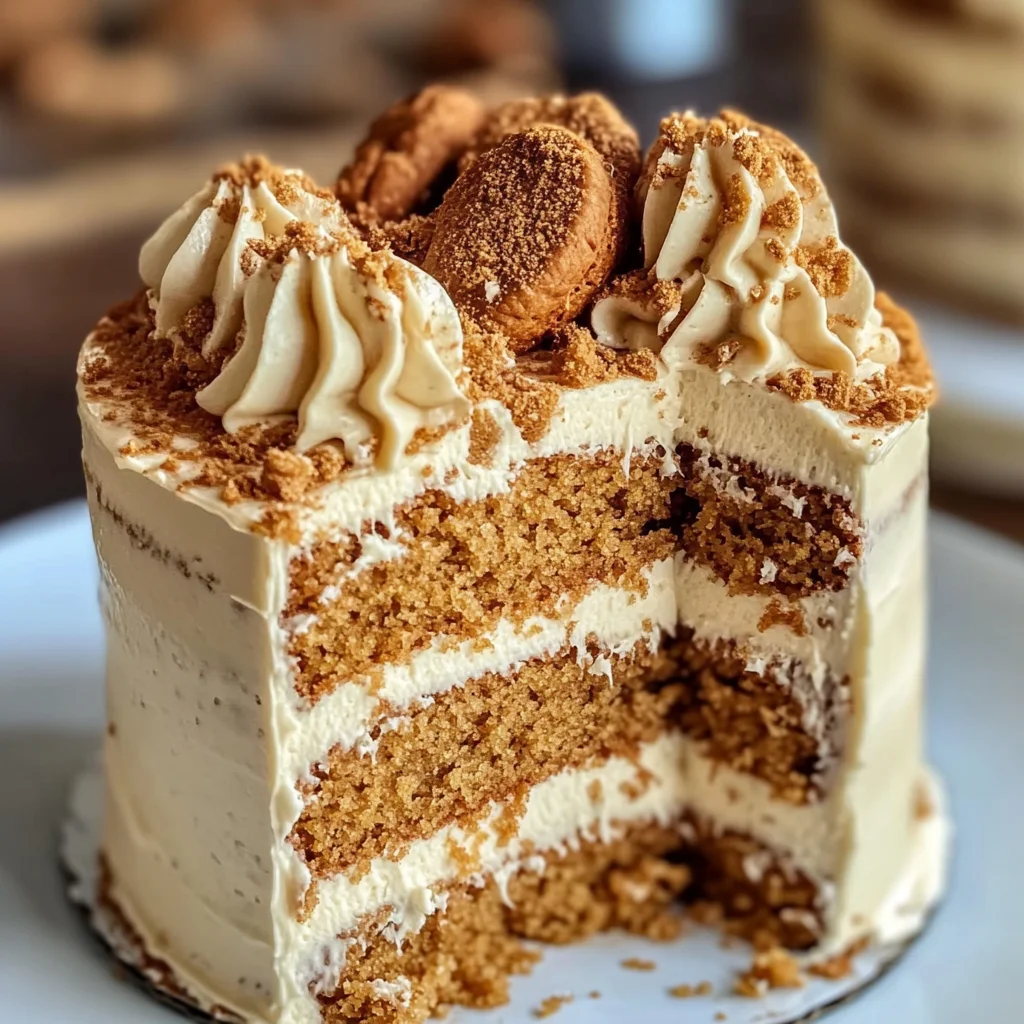
- Customizable Toppings — The crushed Biscoff cookies not only add texture but also an appealing look that will catch everyone’s eye.
- Lasting Freshness — Whether you store it at room temperature or in the fridge, this cake maintains its flavor for days.
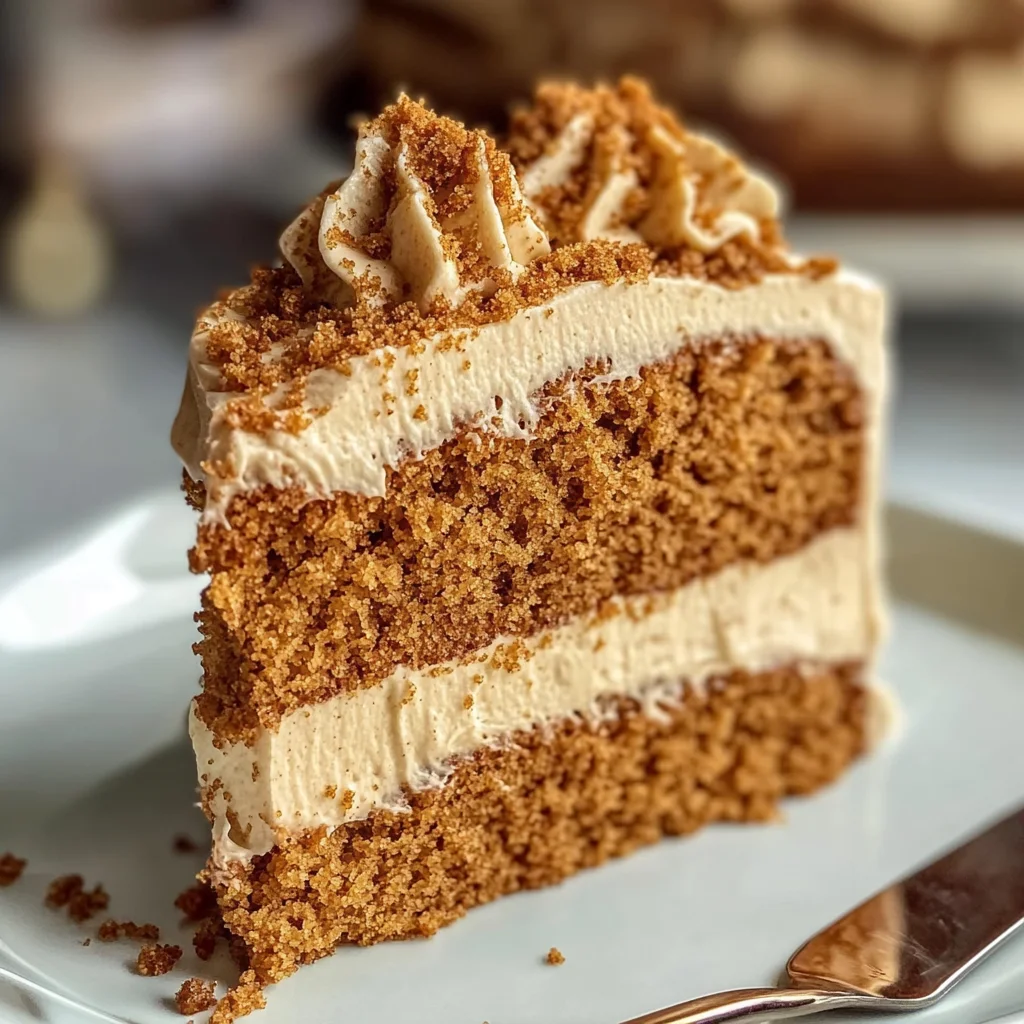
Ingredients You’ll Need
Main Ingredients:
– 2 cups all-purpose flour — Gives structure to your cake.
– 1.5 cups granulated sugar — Sweetens while helping with browning during baking.
– 2 tsp baking powder — Provides lift for fluffy layers.
– 0.5 tsp salt (divided) — Balances sweetness in both the batter and frosting.
– 0.5 cup unsalted butter (1 stick, room temperature) — Creates a rich texture when creamed.
– 3 large eggs (room temperature) — Adds moisture and helps bind ingredients together.
– 1 cup whole milk (room temperature) — Keeps the cake moist and tender.
– 1 tsp vanilla extract (divided) — Enhances overall flavor depth in both layers and frosting.
– 0.25 cup Biscoff cookie butter (smooth, for the cake batter) — Infuses warm spice flavors into the cake itself.
– 1 cup unsalted butter (2 sticks, room temperature) — Forms the base of your creamy frosting.
– 3.5 cups powdered sugar — Sweetens and thickens your buttercream frosting perfectly.
– 1 cup Biscoff cookie butter (smooth, for the buttercream) — Adds flavor richness that complements the cake layers beautifully.
– 2-3 tbsp heavy cream (or whole milk) — Adjusts frosting consistency to be spreadable without being too stiff.
– 10-12 Biscoff cookies (crushed) — For garnish; adds crunch and visual appeal.
Smart Substitutions:
- Instead of all-purpose flour: Use a gluten-free blend — your batch will still have good structure but may be slightly denser.
- Instead of unsalted butter: Use coconut oil — it will give a subtle coconut flavor and keep it dairy-free.
Pro Tip: Always use room-temperature ingredients for better emulsification when creaming butter with sugar.
How to Make Biscoff Cake
Quick Prep Checklist:
* Gather all your ingredients before starting to ensure smooth preparation.
* Preheat your oven early so it’s hot when you’re ready to bake.
Step 1: Prepare Your Cake Pans
Preheat your oven to 350°F (175°C). Grease two 8-inch round pans with non-stick spray or line them with parchment paper circles for easy removal later. Your pans should be ready by the time you mix your batter.
Tip: Using parchment paper helps prevent sticking; always let them cool before trying to remove them from the pans.
Step 2: Mix Dry Ingredients
In a medium bowl, whisk together all-purpose flour, granulated sugar, baking powder, and 0.25 tsp salt until evenly combined. This step ensures that each slice has an even distribution of sweetness and lift.
Watch For: A uniform mixture without lumps indicates you’re ready to combine it with wet ingredients.
Step 3: Cream Butter and Add Eggs
In a large bowl using an electric mixer on medium speed, beat together 0.5 cup unsalted butter until light in color—about two minutes will do it. Add eggs one at a time; mixing well after each addition ensures they incorporate fully into the batter.
Step 4: Combine Wet and Dry Mixtures
Gradually mix in flour mixture while alternating with whole milk until everything is just combined—this keeps your batter from getting overworked which can lead to dense layers.
Step 5: Bake Your Cakes
Pour equal portions into prepared pans. Bake for about 25–28 minutes or until a toothpick inserted comes out clean. Allow cooling in pans on wire racks before flipping them out completely.
✅ Perfect Results Checklist:
* A golden-brown top should form on each layer as they bake evenly in preheated oven temperatures.
* The cakes should spring back when gently pressed in their centers once done baking.
* If any crumbs cling onto your toothpick upon testing don’t worry; just let them bake another minute or so!
Expert Tips & Variations
3 Pro Tips:
* Use Room Temperature Eggs: They incorporate better into batters making them fluffier because they emulsify more easily than cold eggs do straight from the fridge!
* Don’t Overmix: Stop mixing as soon as combined! Overmixing can lead to tough textures rather than light cakes by developing too much gluten in flour-based recipes like this one!
* Chill Your Buttercream: If it’s too soft after mixing add powdered sugar gradually until thick enough—but chilling may help achieve spreadable thickness!
3 Variations to Try:
* Biscoff Marble Cake: Swirl additional melted cookie butter throughout before baking for extra flavor dimension!
* Biscoff Cupcakes: Use smaller cupcake liners instead of full-size pans—you’ll have individual desserts easy-to-share!
* Layered Trifle Dessert: Cut cooled cakes into cubes layered with frosting/whipped cream—a fun twist on traditional presentations!
Common Mistakes to Avoid
Mistake #1: Not Measuring Flour Properly
When I first started baking cakes, I often ended up with dry results because I didn’t scoop correctly—I’d pack down too much flour! The science shows that excess flour absorbs moisture leaving you with dense cakes instead of airy ones. Use scoops to fill measuring cups then level off carefully each time you measure out dry ingredients!
Mistake #2: Using Cold Ingredients
Most home bakers miss this step resulting in lumpy batters where fats cannot blend smoothly! When ingredients like eggs or milk are cold they don’t emulsify leading uneven textures throughout baked goods such as this recipe here! Always set everything out ahead letting things warm up naturally beforehand!
Mistake #3: Opening Oven Door Too Soon
I learned hard way that peeking prematurely leads flat cakes—it interrupts heat flow needed during crucial rising stages while cooking! Instead wait until minimum baking times pass checking through window only if necessary afterwards—patience pays off!
Storage & Reheating
Room Temperature: Store covered on counter up to three days maximum—perfect if serving immediately!
Refrigerator: Keep tightly wrapped leftovers stored safely five days max—flavors still hold up nicely inside air-tight containers!
Freezer: Slice pieces individually wrapped tightly using plastic wrap then place within freezer bags lasting three months frozen!
Reheating:
Oven: Preheat at 300°F; reheat slices about ten minutes restoring moisture lost during storage effortlessly every time!
* Microwave:* Set power level medium heating increments thirty seconds watching carefully until warmed through avoiding overcooking which dries out treats!
Frequently Asked Questions
Can I use other types of cookie spreads?
Yes! While this recipe calls specifically for cookie butter by name—you could substitute any nut spreads like almond or peanut depending on preference—but flavors will vary somewhat accordingly based upon what’s used instead!
How do I know if my cake is fully baked?
Check using toothpick test method; insert into center—if it comes out clean without crumbs clinging onto stick’s surface then it’s done baking! Otherwise allow further time before retesting quickly thereafter ensuring perfect doneness achieved safely!
Can I freeze leftover slices?
Absolutely! Just wrap individual servings tightly followed by placing within zip-lock bags preserving freshness longer term up-to-three months stored away freeze preserving best-tasting quality possible whenever desired later down road again!
What if my frosting is too thin?
If you’ve added too much cream adjust consistency back towards thicker side gradually adding small amounts more powdered sugar blending thoroughly until desired result reached nearing perfection achieved before decorating successfully afterward!
Final Thoughts
This Biscoff Cake delivers exactly what you’re craving—a moist treat layered generously with buttery goodness that’s sure to please anyone fortunate enough tasting it alongside friends family alike at special occasions or simply enjoying dessert night-in-at-home anytime desired!
If you’ve enjoyed making this recipe as much as I did sharing process behind creating delicious experiences through food together then please take moment reflect leave feedback below along rating score ⭐⭐⭐⭐⭐ plus feel free share adventure others likely love indulging equally too!
Biscoff Cake
Indulge in the delightful layers of this Biscoff Cake, where the warm spices and creamy cookie butter create a heavenly experience. Each bite offers a tender crumb that melts in your mouth, paired with a luscious frosting that adds sweetness. Perfect for any occasion, this cake can be customized with your favorite toppings or enjoyed as is.
- Total Time: 48 minutes
- Yield: 12 servings 1x
Ingredients
- 2 cups all-purpose flour
- 1.5 cups granulated sugar
- 2 tsp baking powder
- 0.5 tsp salt
- 0.5 cup unsalted butter, room temperature
- 3 large eggs, room temperature
- 1 cup whole milk, room temperature
- 1 tsp vanilla extract
- 0.25 cup Biscoff cookie butter, for cake batter
- 1 cup unsalted butter, room temperature, for frosting
- 3.5 cups powdered sugar
- 1 cup Biscoff cookie butter, for buttercream
- 2–3 tbsp heavy cream or whole milk
- 10–12 Biscoff cookies, crushed
Instructions
- Preheat your oven to 350°F (175°C) and prepare two 8-inch round pans by greasing them or lining with parchment paper.
- In a medium bowl, whisk together the flour, sugar, baking powder, and 0.25 tsp salt until well combined and free of lumps.
- In a large bowl, beat the 0.5 cup of unsalted butter until light and fluffy; then add the eggs one at a time, mixing well after each addition.
- Gradually mix in the dry ingredients alternating with the whole milk until just combined; avoid overmixing to keep layers light.
- Divide the batter evenly between the prepared pans and bake for about 25–28 minutes or until a toothpick inserted comes out clean.
- Let the cakes cool in the pans for a few minutes before transferring them to wire racks to cool completely.
- For the frosting, beat together 1 cup of unsalted butter and 1 cup of Biscoff cookie butter until smooth; gradually add powdered sugar and heavy cream until desired consistency is reached.
- Once cooled, frost between layers and on top of the cake; garnish with crushed Biscoff cookies for added texture.
- Prep Time: 20 minutes
- Cook Time: 28 minutes
- Category: Dessert
- Method: Baking
- Cuisine: American
Nutrition
- Serving Size: 1 slice (90g)
- Calories: 380
- Sugar: 36g
- Sodium: 270mg
- Fat: 20g
- Saturated Fat: 12g
- Unsaturated Fat: 6g
- Trans Fat: 0g
- Carbohydrates: 47g
- Fiber: 1g
- Protein: 4g
- Cholesterol: 90mg